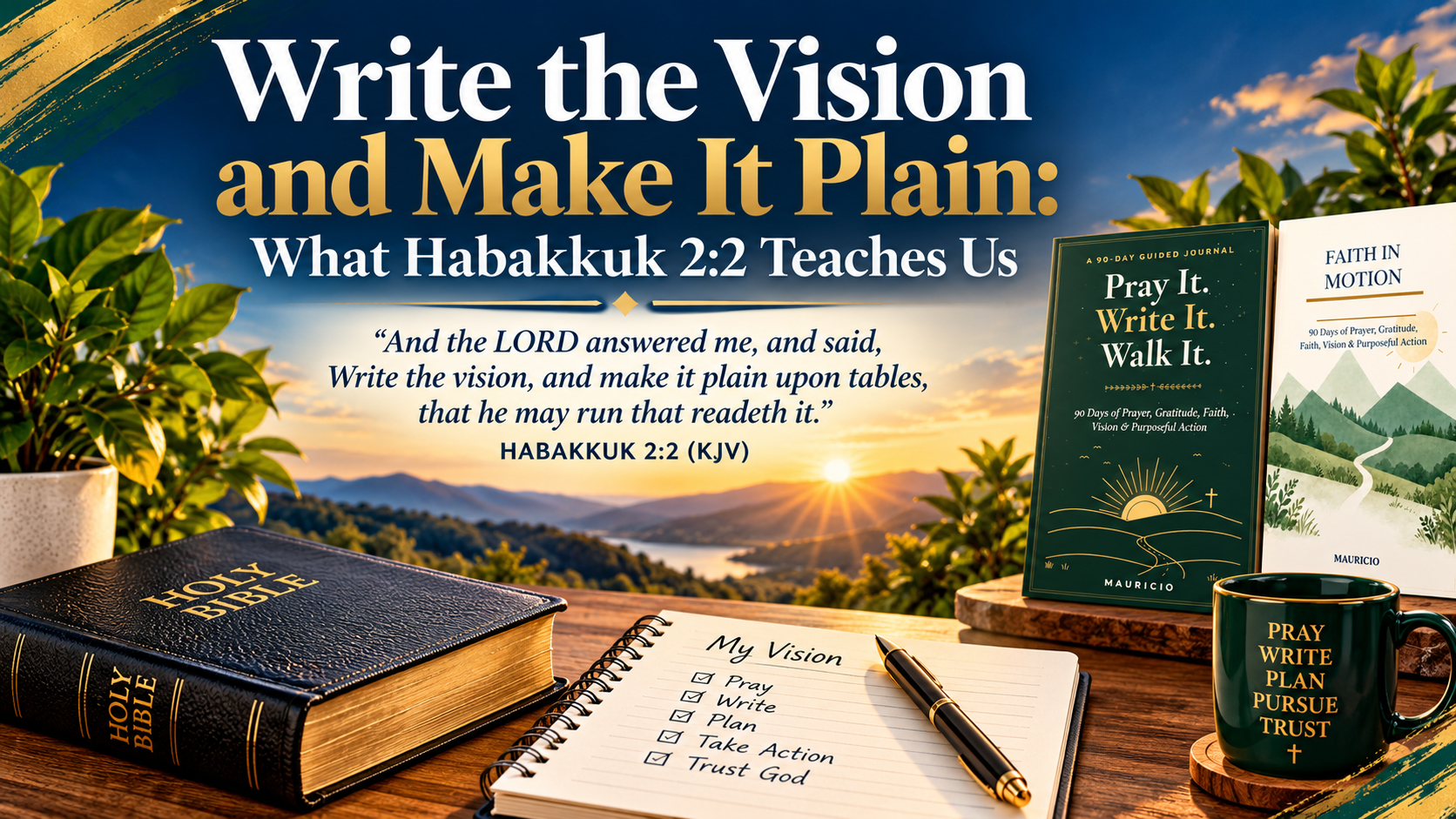
What does it really mean to write the vision, trust God, and take the next faithful step? Understanding Habakkuk 2:2 begins with understanding its biblical context.
Have you ever felt that something important needs to change in your life, but you weren't sure what to do next?
Maybe you want to grow spiritually, strengthen your family, improve your finances, rebuild a relationship, or pursue a more meaningful future.
You have hopes and good intentions, but turning them into clear priorities can feel overwhelming.
One Scripture people often turn to when discussing vision and goal-setting is Habakkuk 2:2.
“And the LORD answered me, and said, Write the vision, and make it plain upon tables, that he may run that readeth it.”
HABAKKUK 2:2 — KJV
This powerful verse deserves more than a motivational slogan. To understand what it teaches, we first need to understand what God was communicating through the prophet Habakkuk.
1. What Does Habakkuk 2:2 Mean?
Habakkuk was a prophet who struggled with difficult questions about injustice, suffering, and God's response to evil.
In chapter one, he questioned why wrongdoing seemed to continue without immediate judgment. God's response challenged Habakkuk's expectations.
At the beginning of chapter two, Habakkuk prepared to receive God's answer.
God instructed him to write the vision clearly so the message could be communicated.
The vision concerned God's revealed purposes and coming judgment—not the prophet's personal ambitions.
Important: Habakkuk 2:2 does not promise that writing down any personal goal guarantees its success.
We can learn valuable lessons about clarity, patience, and faith from the passage without treating it as a promise that every personal dream will come true.
2. Why Writing Things Down Matters
Think about how many responsibilities compete for your attention every day.
You may be thinking about your family, bills, employment, health, relationships, and future goals.
When everything stays in your head, deciding where to begin can be difficult.
Writing creates an opportunity to slow down, reflect, and organize your thoughts.
Three Questions to Ask Yourself
- Where am I right now? Describe your current circumstances honestly.
- What matters most? Identify priorities that reflect your values and responsibilities.
- What should I do next? Choose one meaningful and realistic action.
For Christians, journaling can also provide a place to record prayers, reflect on Scripture, and consider whether personal goals align with biblical values.
3. What Does It Mean to Make the Vision Plain?
Clarity matters when turning good intentions into responsible actions.
For example, someone might write:
“I want to do better financially.”
That is a meaningful desire, but it does not identify the next step.
A clearer goal could be:
“For the next 90 days, I will track my spending, review my bills each week, and begin building an emergency savings habit.”
The second statement provides direction. It gives you something to work toward and a way to evaluate your progress.
Writing a plan does not eliminate uncertainty, but it can help make your next responsible action easier to identify.
4. Faith Requires More Than Good Intentions
The Bible also teaches that genuine faith should influence how we live.
“Even so faith, if it hath not works, is dead, being alone.”
JAMES 2:17 — KJV
In context, James emphasizes that genuine faith expresses itself through action, particularly through caring for people in need.
This does not mean that completing personal goals earns God's favor.
It reminds us that faith should shape our conduct.
- Praying about financial stress can accompany building a budget.
- Praying about relationships can accompany listening and making amends.
- Praying about spiritual growth can accompany Scripture study and serving others.
Prayer and responsible action can belong together.
5. Five Steps for Writing Your Personal Vision
Step One: Begin With Prayer
Ask God for wisdom, humility, and direction.
“Heavenly Father, help me recognize what matters most. Give me wisdom for the responsibilities before me and courage to take the next faithful step. In Jesus' name, Amen.”
SAMPLE PERSONAL PRAYER
Step Two: Examine Your Current Situation
Be honest about your spiritual growth, finances, family responsibilities, health, and relationships.
A realistic plan begins with understanding your starting point.
Step Three: Write One Clear Goal
Choose something meaningful and specific. Rather than attempting to change everything at once, begin with one area.
Step Four: Identify Your Next Action
What can you responsibly do today?
Your action might involve reading Scripture, reviewing a budget, learning a skill, having an important conversation, or helping someone.
Step Five: Review Your Progress
Return to your written goal regularly. Consider what you have learned and what might need to change.
Remain open to wisdom, new information, and circumstances beyond your control.
6. Why Patience Matters When Pursuing a Vision
“For the vision is yet for an appointed time, but at the end it shall speak, and not lie: though it tarry, wait for it; because it will surely come, it will not tarry.”
HABAKKUK 2:3 — KJV
In its original setting, this assurance concerns God's revealed vision and His timing.
It should not be treated as a guarantee that every personal ambition will be fulfilled.
Still, the passage encourages trust and patience when circumstances are difficult to understand.
Some progress takes time. Some plans need revision. Some opportunities may not work out.
Faithful living includes patience, discernment, perseverance, and humility about outcomes.
7. A Seven-Day Prayer and Vision Exercise
Try this simple reflection exercise during the next seven days.
Write about an area where you need wisdom.
Record three specific blessings you appreciate.
Read Habakkuk chapters 1 and 2 in context.
Write one meaningful personal goal.
Complete one responsible step toward that goal.
Reflect on Scripture that encourages faithful living.
Write what you learned and your next step.
This exercise is a practical journaling activity, not a biblical requirement.
Its purpose is to encourage reflection, prayer, and thoughtful action.
Put Prayer, Gratitude, and Vision Into Practice
If you've been wanting to build a consistent prayer and journaling routine, a guided Christian journal can give you a place to begin.
Instead of wondering what to write every day, you can follow structured prompts that encourage prayer, gratitude, Scripture reflection, vision, and purposeful action.
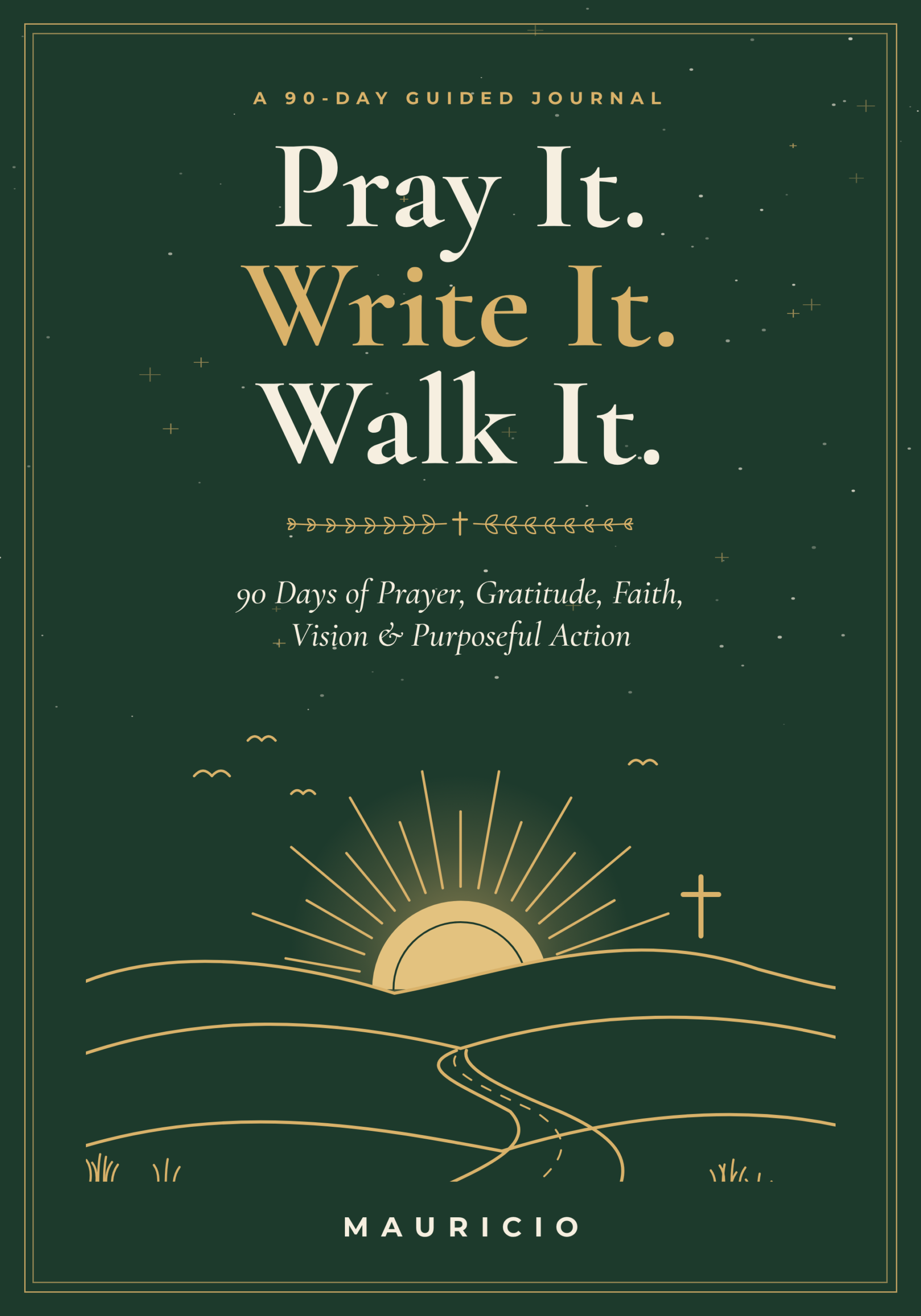
Pray It. Write It. Walk It.
90 Days of Prayer, Gratitude, Faith, Vision & Purposeful Action.
A guided journal designed to help you pray intentionally, express gratitude, write your priorities, and take meaningful steps forward.
View Journal on Amazon →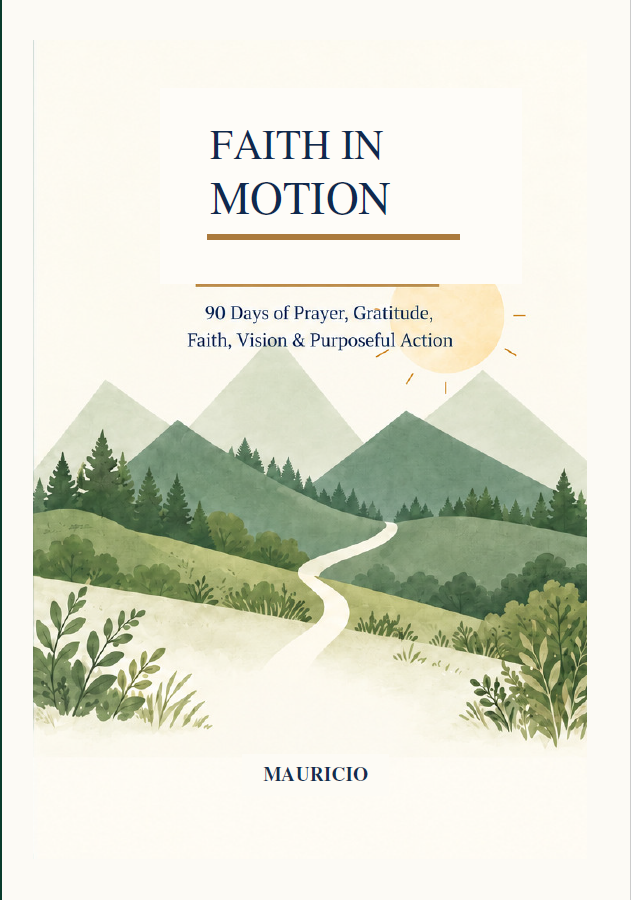
Faith in Motion
90 Days of Prayer, Gratitude, Faith, Vision & Purposeful Action.
By Mauricio Villalba. Features KJV Scripture devotionals, guided prayer, gratitude exercises, daily action steps, evening reflection, and weekly reviews.
View Journal on Amazon →These journals support personal reflection. They do not guarantee outcomes or replace Scripture, fellowship, or wise counsel.
Frequently Asked Questions
Does Habakkuk 2:2 mean I should write down my goals?
The verse originally concerns a divine vision given to the prophet Habakkuk. Writing personal goals may be helpful, but it is not the passage's direct meaning.
Does writing a vision guarantee that it will happen?
No. Writing can improve clarity and planning, but it does not guarantee results or establish God's approval of a particular ambition.
Can Christians use vision journals?
Yes. A journal can support prayer, Scripture reflection, gratitude, responsible planning, and spiritual growth.
How often should I review my vision?
A weekly review can be useful. Consider what you've learned, what actions you've completed, and whether your plan needs adjustment.
What should I write in a Christian vision journal?
You can include prayers, Scripture reflections, gratitude, personal priorities, realistic goals, and meaningful actions.
Final Thoughts: Take the Next Faithful Step
Habakkuk 2:2 teaches us about God's revealed message being communicated clearly.
Our personal dreams are not the same as prophetic revelation.
Still, writing can be a valuable tool for prayerful reflection and responsible planning.
Study God's Word carefully. Bring your concerns to Him in prayer. Clarify what matters most. Take the next responsible step.
Pray with honesty.
Give thanks daily.
Write your vision.
Keep moving in faith.