90-Day Prayer, Gratitude & Vision Challenge
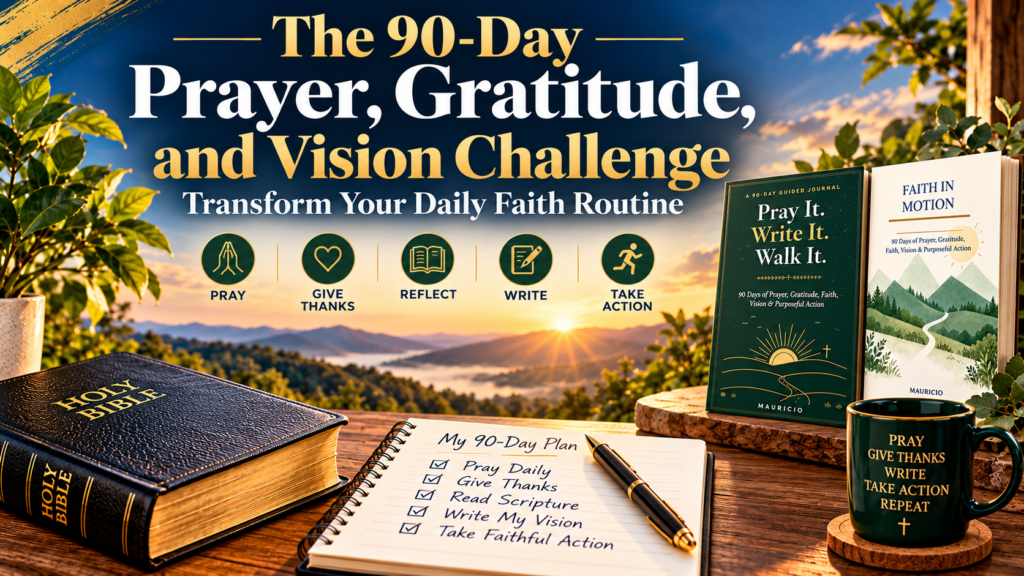
Prayer • Gratitude • Vision • Action
The 90-Day Prayer, Gratitude, and Vision Challenge
A practical Christian journaling journey to help you
pray consistently, recognize everyday blessings,
clarify meaningful priorities, and take faithful action.
What could you learn about your faith and daily habits if you spent the next 90 days becoming more intentional?
Not by trying to make every day perfect. Not by expecting every prayer to be answered exactly as you want. But by making regular space for prayer, Scripture, gratitude, and reflection.
Many people want to strengthen their relationship with God, yet life becomes busy. Between work, financial responsibilities, relationships, and family needs, spiritual reflection can easily fall to the bottom of the list.
The 90-day prayer, gratitude, and vision challenge offers a simple approach to developing a more consistent devotional routine.
For the next 90 days, focus on one repeatable pattern: Pray. Give Thanks. Reflect. Write. Take One Faithful Step.
1. Why Choose a 90-Day Faith Challenge?
Three months offers enough time to practice a routine, notice which habits work for you, and make adjustments as life changes.
The purpose is not to become a completely different person in exactly 90 days.
Instead, this challenge encourages you to develop practices that can continue long after the calendar ends.
- Make regular time for prayer.
- Study Scripture more thoughtfully.
- Develop a habit of expressing gratitude.
- Reflect on personal responsibilities and goals.
- Choose actions consistent with your faith.
- Review what you are learning each week.
2. Begin With a Biblical Foundation
Prayer and gratitude are important parts of Christian life.
“Pray without ceasing.”
1 THESSALONIANS 5:17 — KJV
This verse encourages believers to maintain an ongoing life of prayer rather than limiting communication with God to occasional moments.
“In every thing give thanks: for this is the will of God in Christ Jesus concerning you.”
1 THESSALONIANS 5:18 — KJV
Giving thanks in difficult circumstances does not mean calling suffering good or denying genuine problems. Christians can express gratitude while also bringing grief, questions, and concerns before God.
Daily journaling provides one optional way to reflect on these practices.
3. The Five Parts of Your Daily Routine
Part One: Begin With Prayer
Take a few minutes to speak honestly with God.
You might write about your family, worries, work, hopes, or decisions.
Example:
Heavenly Father, thank You for today. Help me recognize what matters most, act with integrity, and respond to others with patience and wisdom. In Jesus’ name, Amen.
SAMPLE PERSONAL PRAYER
Part Two: Write Three Things You’re Grateful For
They might be ordinary blessings: a conversation, a safe place to rest, daily provision, a relationship, or an opportunity to learn.
Try writing specific details rather than only general statements.
Part Three: Reflect on Scripture
Read a short Bible passage and consider its original context. Ask what it teaches about God and how its principles may influence your attitudes or decisions.
Part Four: Write Your Vision or Priority
Identify something meaningful you want to work on: spiritual growth, family relationships, responsible financial stewardship, health, service, or career development.
Remember that personal plans are not prophetic guarantees. Writing can support clarity without promising an outcome.
Part Five: Take One Faithful Action
Choose one realistic action for the day. That might mean offering encouragement, reviewing a budget, reading Scripture, having an important conversation, or helping someone.
4. Your 90-Day Roadmap
Build the foundation. Practice a simple routine and discover a time that works for you.
Deepen reflection. Notice patterns in your prayers, gratitude, and priorities.
Strengthen consistency. Apply what you learn and plan how to continue.
5. Days 1–30: Build Your Foundation
During the first month, focus on showing up rather than writing long entries.
Begin with five to ten minutes whenever possible.
For your first seven days, try this plan:
Repeat this general pattern during the remaining weeks of the first month.
Your Day 30 Milestone
Answer these questions in your journal:
- What made prayer easier or more difficult?
- Which Scripture passages stayed with me?
- What blessings did I begin noticing?
- What would make this routine more sustainable?
6. Days 31–60: Deepen Your Faith and Reflection
Now that you’ve practiced the basics, look more closely at the themes appearing in your journal.
Consider including prayers for others, thoughtful Bible study, and reflection on responsibilities that need attention.
Four Weekly Focus Areas
- Week 5: Patience and trusting God during uncertainty.
- Week 6: Gratitude during ordinary and difficult days.
- Week 7: Wisdom in relationships and decisions.
- Week 8: Faith expressed through service and responsible action.
During Days 57–60, review the themes that have emerged rather than starting another complicated routine.
Your Day 60 Milestone
Ask yourself whether you’re growing in consistency, humility, and awareness of others’ needs. Consider what you should continue and what you should change.
7. Days 61–90: Put Faith Into Practice
In the final month, focus on living out the principles you’re learning.
Maybe your next faithful step involves reconciliation, service, improved stewardship, more intentional family time, or a wiser approach to personal goals.
Your actions do not need to be dramatic. Often, meaningful progress comes through ordinary responsibilities handled with greater care.
Your Day 90 Reflection
- What have I learned about my prayer life?
- How has my gratitude practice changed?
- Which habits do I want to continue?
- What personal priorities need renewed attention?
- What is one faithful step for the next 90 days?
Success isn’t completing 90 perfect journal entries. It’s developing a practice that helps you pray honestly, reflect carefully, and act with purpose.
8. What if You Miss a Day?
Life will not always cooperate with your plans.
You may work late, become ill, need to care for someone, or simply forget.
Do not turn your journal into another source of guilt.
Pick up where you left off. If your schedule changes, shorten the routine. The purpose is consistency over time, not perfect attendance.
9. Choose a Guided Christian Journal
If you’d like structured daily devotionals and writing prompts, these two guided journals can support your 90-day practice.
Pray. Give Thanks. Write Your Vision. Take Action.
These guided journals help you make room for Scripture, prayer, gratitude, reflection, and purposeful action.
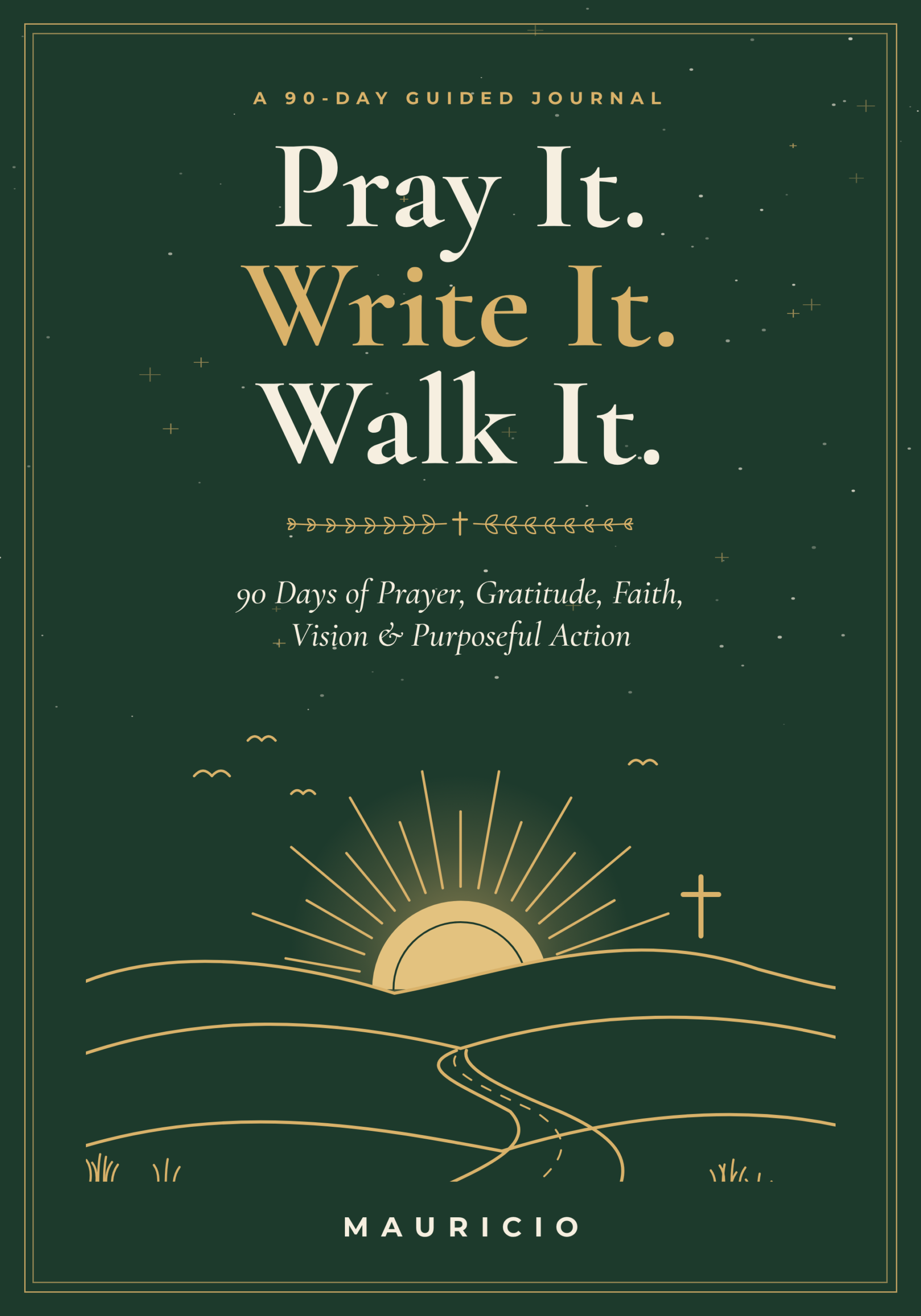
Pray It. Write It. Walk It.
A guided 90-day Christian journal centered on prayer, gratitude, faith, vision, and purposeful action.
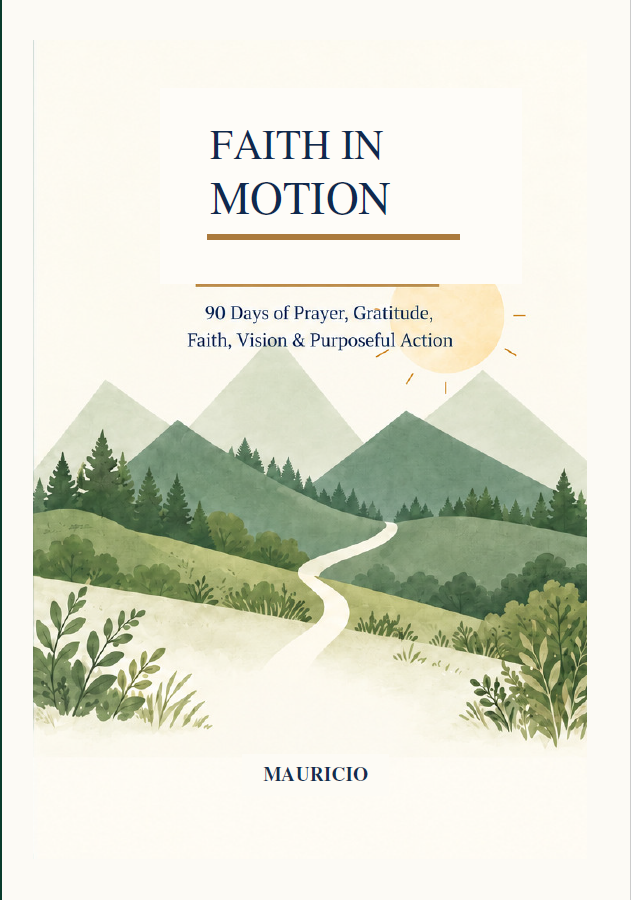
Faith in Motion
90 Days of Prayer, Gratitude, Faith, Vision & Purposeful Action, by Mauricio Villalba. Includes KJV devotionals, writing exercises, and milestone reviews.
Guided journals are tools for reflection. They do not guarantee particular results or replace prayer, Scripture, fellowship, or wise counsel.
10. Keep Learning With These Articles
Frequently Asked Questions
What is a 90-day prayer journal challenge?
It is a structured period for developing habits of prayer, gratitude, Scripture reflection, and personal journaling.
Do I have to write in my journal every day?
No. Daily writing can be helpful, but you can adapt the routine to your responsibilities and return whenever you miss a day.
Can I include financial goals in a Christian journal?
Yes. You can reflect on responsible stewardship, budgeting, work, giving, and personal priorities alongside prayer and Scripture study.
Will completing this challenge guarantee spiritual or financial success?
No. The challenge is a practical devotional routine, not a promise of specific outcomes.
What should I do after Day 90?
Review your experience, keep the habits that were meaningful, and choose a sustainable routine for the months ahead.
Final Thoughts: Begin Today
You don’t need to wait until a new year to become more intentional about prayer and gratitude.
Begin with five minutes. Write a sincere prayer. Reflect on one passage of Scripture. Name something you’re thankful for. Choose one faithful action.
Then return tomorrow.
Give thanks daily.
Write your vision.
Keep moving in faith.